Nobody Taught Us How the City Works — So Let's Teach Each Other
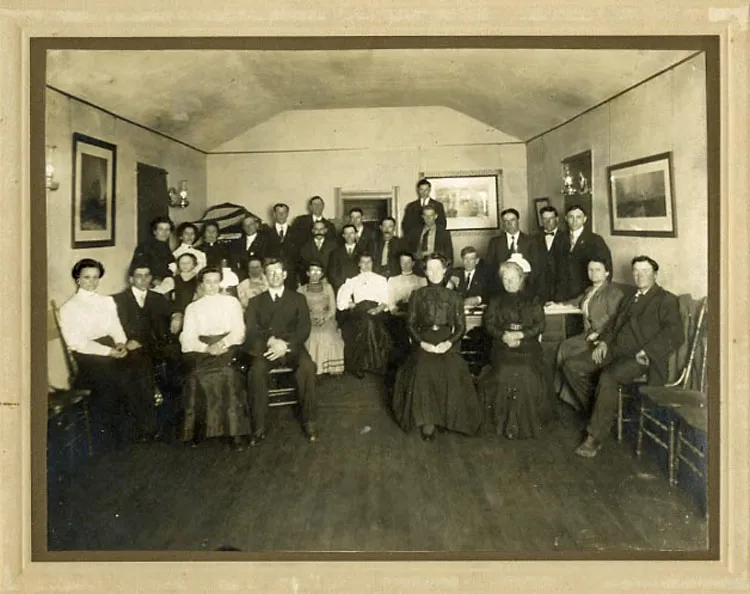
Photo: Unknown, Public domain, via Wikimedia Commons
Here is a question I have asked at dozens of neighborhood meetings across Fort Worth: how many of you can name your council member? In rooms full of engaged, intelligent, civically concerned people, the honest answer is usually fewer than half. Ask who represents them on the zoning commission, or what a planning and zoning case number looks like, and the room goes quiet.
This is not a failure of character. It is a failure of curriculum.
The Gap Nobody Closed
American civics education, where it survives at all, stops at the water's edge of the federal government. We learn the three branches of government, the Bill of Rights, and how a bill becomes a law — and then we graduate into lives governed almost entirely by entities we never studied. The school board that sets our property taxes. The planning commission that approves the development next door. The municipal court that issues the fines. The water district, the crime control district, the hospital district — an entire lattice of government that most Texans could not sketch on a whiteboard if their lives depended on it.
Fort Worth is no exception. If anything, the city's explosive growth makes the gap wider: tens of thousands of new residents arrive every year, many from other states or countries, with no civic inheritance at all. They are handed a city of nearly a million people and expected to navigate it by instinct.
The predictable result shows up in every statistic we cover at FW Action: turnout in the single digits, public hearings that draw three speakers, zoning decisions made without a single affected neighbor in the room. Residents are not apathetic. They are unarmed. Nobody ever handed them the map.
The Case for a Neighborhood Curriculum
City Hall will not fix this, and it should not be asked to. Governments are structurally bad at teaching citizens how to challenge them. The institutions that can do this work already exist in every Fort Worth neighborhood: public libraries, congregations, neighborhood associations, and the community organizations that have been doing informal civic education for generations without calling it that.
What would a serious, community-taught civics curriculum look like? Not a lecture series on the Federalist Papers. Something far more practical:
- Session one: Who actually decides. A plain-language map of Fort Worth's government — council districts, boards and commissions, the difference between the city manager and the mayor, and how a regular resident gets an item on an agenda.
- Session two: Follow a real case. Pick a live zoning or permit application in the neighborhood and walk through it end to end: the notice in the mail, the public hearing, the standards the commission must apply, and where residents can legally intervene.
- Session three: The budget. Not theory — the actual current city budget, with the five or six lines that matter most, translated into plain English.
- Session four: The records and the rules. How to file a public information request, what the Texas Open Meetings Act requires, and what to do when the law is on your side and City Hall is stalling anyway.
None of this requires a grant, a nonprofit startup, or a university partnership — though all would help. It requires a librarian willing to host, a congregation willing to announce, and a handful of residents willing to learn the material well enough to teach it once.
Cities Are Already Trying
This is not a utopian proposal. Several cities have experimented with versions of it. Long-running citizens' academies — modeled on police and fire citizen academies — now exist in dozens of municipalities, taking residents through a semester of how city departments actually function. Some library systems, including large urban systems elsewhere in Texas, have built civic literacy programming directly into their branch offerings. Neighborhood associations in fast-growing cities have begun running their own "how City Hall works" workshops timed to the annual budget cycle.
The limitation of the government-run citizens' academy, however, is the same limitation that plagues every government outreach effort: it teaches residents how the city wants to be understood. A curriculum built by libraries, churches, and neighborhood groups can go further. It can teach not just how the machinery works, but how to hold it accountable when it doesn't.
An Education Worth Having
There is a reflexive cynicism in telling people to educate themselves about a system that has often ignored them. Fair enough. But ignorance has never protected anyone from the zoning map, the tax rate, or the fine schedule. It only guarantees that decisions get made without you.
Fort Worth will add hundreds of thousands of residents over the coming decades. The question is not whether those residents will be governed. They will be, thoroughly and constantly, by institutions most of them cannot name. The question is whether they will be governed knowingly — whether the civic knowledge that currently concentrates in a few hundred well-connected insiders can be spread, street by street, congregation by congregation, until the people who live in this city understand the machine that runs it.
The schools had their chance and moved on. The library is open. The church hall is available. The neighborhood association already has a meeting on the calendar. All that's missing is the decision to start teaching.