May's Silent Electorate: The Small Circle of Voters Who Choose Fort Worth's Future
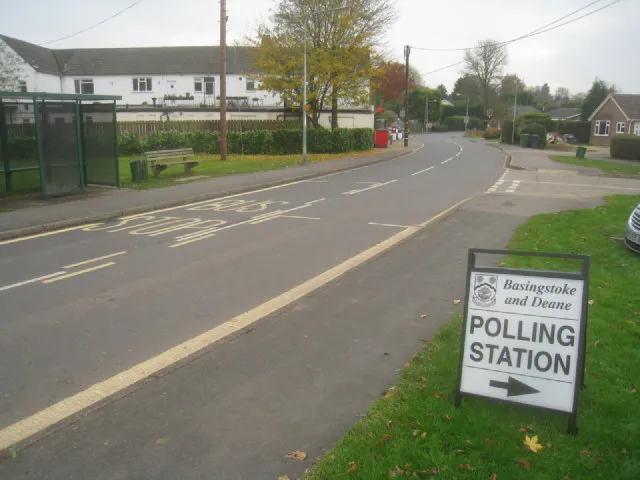
Photo: ad acta , CC BY-SA 2.0, via Wikimedia Commons
Every other spring, Fort Worth's future is decided by roughly one in ten registered voters. The rest of the city — renters, young families, new arrivals, the working poor who keep the ninth-largest city in America running — stays home. This is not an accident of apathy. It is the predictable outcome of a calendar, a ballot design, and a set of assumptions about who matters that municipal governments across Texas have quietly preserved for decades.
The Numbers Behind the Silence
Consider the arithmetic. In the 2023 general municipal election, turnout in Fort Worth's mayoral and council races hovered near 10 percent of registered voters. Compare that to November general elections, when presidential and gubernatorial contests routinely draw 50 to 60 percent or more. The gap is not subtle — it is a chasm, and everything about who governs the city flows through it.
The demographics of that May electorate are equally stark. Precinct-level analysis across Tarrant County consistently shows the off-cycle voter as older, wealthier, and far more likely to own their home than the city at large. Homeowners with a direct stake in property tax rates, long-tenured residents with established voting habits, and retirees with flexible schedules dominate the rolls. Renters — who make up nearly half of Fort Worth's households — barely register. Neither do the roughly one in five residents under the age of 30.
The consequences compound. A council seated by a homeowner-heavy, older electorate tends to reflect that electorate's priorities: stable tax rates, property values, and incremental change. That is not to say those concerns are illegitimate. It is to say they become the only concerns when the ballot is effectively the property of one constituency.
Why the Calendar Is a Policy Choice
Defenders of May elections point to Texas law, which permits general elections for city offices in November but leaves the choice to local governing bodies. Fort Worth, like most Texas cities, has historically kept its municipal contests in May, citing tradition and — in some eras — the well-documented political advantage that low-turnout elections confer on incumbents and organized interests.
The evidence for that advantage is not theoretical. Research on off-cycle elections nationwide has found measurable shifts in public spending and policy outcomes when turnout drops. When the people who vote in May are systematically different from the people who vote in November, the government they select is systematically responsive to a narrower band of public needs. Transit investment, affordable housing, tenant protections, and youth services — priorities that poll well across the full population — tend to fare worse than priorities concentrated among the reliable May voter.
What Organized Residents Can Actually Do
The turnout gap is large, but it is not immutable. Cities that have moved their municipal elections to November — including several Texas suburbs in recent years — have seen participation multiply overnight, often by a factor of three or more, at zero cost to the city beyond a ballot realignment. That is the single highest-leverage reform available, and it requires only a council vote and, in some configurations, voter approval through a charter amendment.
Civic organizations need not wait for that vote. A focused strategy looks like this:
- Target the second-tier voter. People who vote in presidential elections but skip midterms and municipal contests are the easiest converts. They have already demonstrated the habit; they simply need a reason and a reminder that the May ballot affects their rent, their streets, and their safety.
- Meet voters where the city meets them. Library branches, apartment complex mailrooms, community college campuses, and church bulletin boards reach populations that traditional campaign mail never touches.
- **Make the stakes concrete." Vote local" is an abstraction. "Your council member voted on the apartment complex next door, the hours at your library, and the fine schedule at municipal court" is a reason.
- Track the promise. Groups that register and mobilize voters in May should also monitor how the resulting council votes. Accountability is what converts turnout from an event into a habit.
Democracy on the City's Own Schedule
Fort Worth prides itself on growth, ambition, and a certain muscular optimism. A city that adds a hundred new residents a week cannot afford a democracy that only a select few bother to attend. The May election calendar is a relic, and relics can be retired. Whether it will be depends less on City Hall than on whether the residents who stay home in May can be persuaded — one election, one conversation, one ballot at a time — that the city belongs to them too.