The Meetings Nobody Attends That Decide Everything: How Utility Districts Are Quietly Building Fort Worth's Future
The Infrastructure Is the Policy
There is a common assumption in civic life that the most important decisions happen in the most visible rooms. In Fort Worth, that assumption leads residents toward city council meetings, zoning hearings, and school board sessions—all legitimate and important venues. But it leaves another set of rooms almost entirely empty, rooms where decisions are made that are, in many respects, more consequential than anything that happens in council chambers.
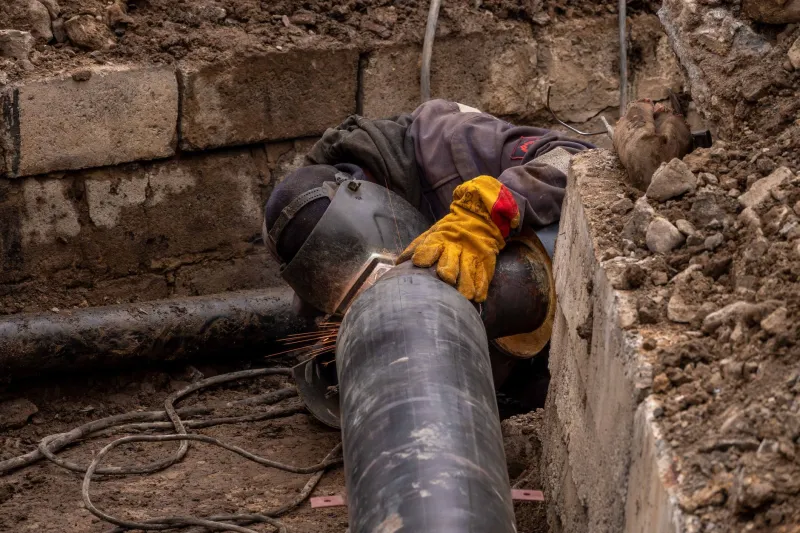
Water line capacity determines where dense development can go. Drainage infrastructure determines which low-lying neighborhoods flood when the next major storm arrives. Road and intersection design determines whether a residential street becomes a cut-through corridor for a new subdivision. These are not abstract policy questions. They are the physical skeleton of community life, and they are built—or not built—based on decisions made in meetings that most Fort Worth residents have never heard of.
A Landscape of Overlapping Jurisdictions
The infrastructure governance landscape in the Fort Worth region is genuinely complex, and that complexity is part of why public attention rarely reaches it. Multiple types of entities make decisions that affect neighborhood character and development patterns.
Municipal Utility Districts (MUDs) are political subdivisions of the state, authorized by the Texas Commission on Environmental Quality, that finance and operate water, wastewater, and drainage infrastructure for new developments. There are dozens of active MUDs in the broader Fort Worth metropolitan area. Each has its own elected board, holds public meetings, and issues bonds backed by property taxes—often the property taxes of residents who had no vote in the district's creation.
Water Control and Improvement Districts operate similarly, with authority over irrigation and drainage that extends into land use implications. Special Utility Districts serve specific geographic areas with water service. And within the city itself, the Fort Worth Water Department's capital improvement planning process makes decisions about system extensions and capacity upgrades that directly enable or constrain where development can occur.
Beyond water and drainage, Transportation Improvement Programs managed by the North Central Texas Council of Governments (NCTCOG) allocate federal and state transportation dollars across the region. The projects that receive funding—and those that do not—shape mobility patterns for decades. These programs have public comment periods. Those comment periods are rarely crowded.
Why Developers Show Up and Residents Don't
The attendance asymmetry at infrastructure meetings is not accidental. It reflects a rational allocation of attention by parties whose financial interests are directly at stake.
A developer planning a 500-unit subdivision on Fort Worth's western edge has an enormous financial incentive to ensure that water and wastewater capacity is extended to their property, that drainage infrastructure is designed to accommodate their impervious cover, and that road improvements are timed to coincide with their project's completion. That developer, or their engineer, or their attorney, will be present at every relevant meeting. They will submit comments, build relationships with district staff and board members, and ensure that their project's infrastructure needs are understood and accommodated.
The residents of the existing neighborhood adjacent to that development have equally significant stakes. They will live with the traffic, the drainage consequences, and the character changes that follow from those infrastructure decisions. But they do not know the meetings are happening. They are not on the notification lists. And by the time the consequences become visible, the infrastructure decisions that enabled them were finalized years earlier.
This is not a conspiracy. It is a structural information gap that consistently advantages organized financial interests over diffuse community ones.
Reading the Infrastructure to Understand the Development Pipeline
One of the most valuable—and underused—forms of civic intelligence available to Fort Worth residents is infrastructure tracking. Water and wastewater capacity extension requests, drainage study submissions, and transportation impact analyses are all documents that precede development applications. In many cases, they precede them by years.
A neighborhood association that learns to read infrastructure documents can identify development pressure on their community long before a rezoning application is filed. That lead time is enormously valuable for organizing, coalition-building, and engaging with the political process from a position of preparation rather than reaction.
The Fort Worth Water Department publishes its capital improvement program. NCTCOG's transportation planning documents are publicly available. MUD board meeting minutes are public records. None of these documents are easy reading, but none of them are inaccessible.
A Practical Guide to Tracking Infrastructure Decisions
For residents and neighborhood organizations ready to engage at this level, the following steps provide a starting framework.
Identify which districts overlap your neighborhood. The Texas Commission on Environmental Quality maintains a publicly searchable database of utility districts, including their geographic boundaries and contact information. Knowing which MUDs and special districts operate near your community is the foundational step.
Request to be added to meeting notice lists. Most utility district boards are required to post public meeting notices, and many will add interested residents to email notification lists upon request. This is a simple ask that yields significant returns.
Attend at least one board meeting per quarter. Regular attendance signals community interest and creates the opportunity to ask questions about pending capacity requests or infrastructure extension proposals. Board members who know that residents are watching make different decisions than those who believe no one is paying attention.
Request capital improvement plans and engineer's reports. These documents describe the infrastructure investments a district is planning, the capacity they are designed to serve, and the development assumptions built into the projections. The gap between a district's current service population and its planned capacity is a direct indicator of anticipated growth.
Submit written comments on transportation improvement programs. NCTCOG's public comment periods on regional transportation plans are genuine opportunities for community input. Written comments become part of the public record and require formal responses.
Connect infrastructure tracking to zoning monitoring. When a large rezoning application is filed, the infrastructure capacity analysis submitted with it describes what the developer is asking the city's systems to absorb. Cross-referencing those requests with utility district capacity data reveals whether the infrastructure assumptions are realistic.
Building a Community Infrastructure Watch
No individual resident can monitor the full landscape of infrastructure governance in a metropolitan area as large and rapidly growing as Fort Worth. But a coordinated network of neighborhood organizations, each tracking the districts and programs most relevant to their geography, can collectively maintain meaningful oversight of a system that currently operates with almost no community accountability.
FW Action has long argued that civic power is not reserved for those who show up to the most visible meetings. It belongs to those who understand where decisions are actually made—and show up there instead. Infrastructure governance is one of the most consequential and least contested arenas in Fort Worth's civic life. That is not an inevitability. It is an invitation.